


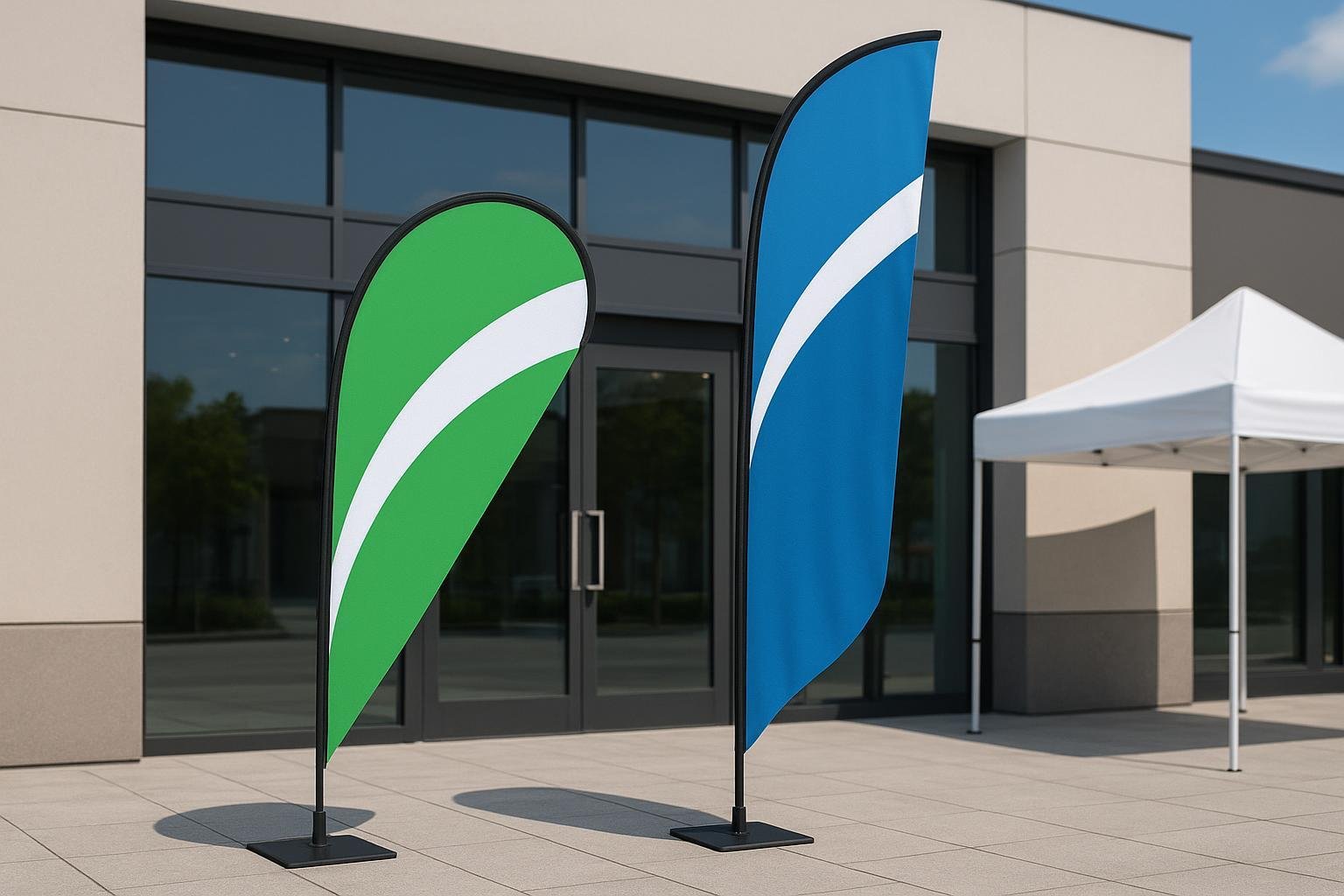
TL;DR: Custom feather flags still win in 2026 because they do two things static signage can’t: they move and they work at distance. If you’re comparing vendors, don’t start with “Which flag looks coolest?” Start with materials, print method, pole + base setup, and what you’ll do on windy days. This guide gives you a framework you can use in five minutes—then goes deep where it matters.
Key Takeaway: In consideration-stage buying, the best feather flag isn’t the one with the loudest marketing. It’s the one whose fabric + printing + hardware + base match your site conditions and timeline.
The 60-second buyer framework (use this before you request a quote)
If you only read one section, read this one.
1) Fabric: knit vs mesh (and what “durable” actually means)
Knit polyester is the default for most outdoor feather flag banners: good color, good movement, and generally strong enough for everyday use.
Mesh/perforated options reduce wind load in exposed locations (coastal lots, open intersections, rooftop corners). You’re trading a bit of color density for less stress on the pole.
2) Printing: how the image gets onto the fabric
Ask what printing process is used—and whether the vendor can explain it clearly.
Vancke uses full color Digital Heat Transfer Printing for its custom feather flags, which is specifically called out on the product page for Vancke Custom Feather Flags.
3) Hardware: the pole system matters as much as the flag
Your flag can be great and still fail because:
the pole sleeve isn’t reinforced
the pole joints flex poorly
the swivel/rotator is missing or cheap
the base is wrong for the surface
A practical durability marker many suppliers point to is reinforced pole sleeves (often a tougher sleeve material) to reduce tearing at the highest-stress edge—see this guide on making feather flags with poles more durable.
4) Wind plan: “What’s our take-down rule?”
This is where a lot of “my flag broke” stories start.
Even heavy-duty setups should have a wind plan, because gusts are unpredictable and bases tip before fabrics tear. SmartSign’s product guidance for Custom Feather Flags notes typical sustained-wind ranges and that flags should be removed when wind exceeds safe limits.
Why kinetic advertising still dominates (even in 2026)

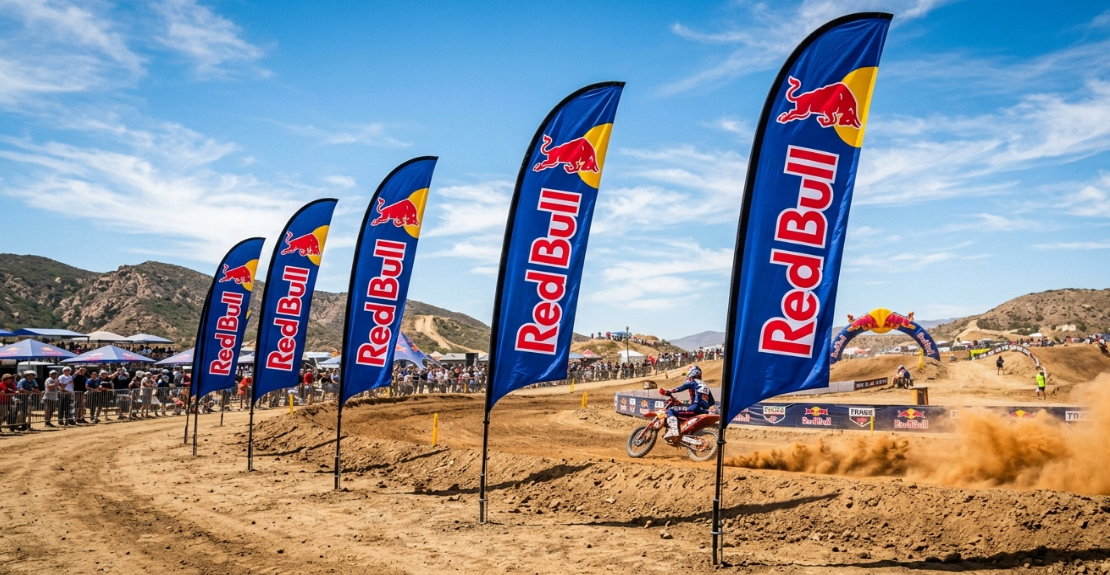
Digital ads are everywhere. Physical attention is not.
A feather flag’s movement creates a built-in interrupt: the eye catches motion first, then reads the message second. That’s why swooper flags keep showing up outside retail, venues, and pop-ups—especially when teams need visibility without waiting on permits for permanent signage.
Custom feather flags vs. “cheap flags”: the comparison that matters
There’s a right time to buy the cheapest option. The mistake is treating a quick one-off promo the same way you treat a six-month storefront placement.
Here’s the comparison framework I recommend using when you’re evaluating vendors.
Evaluation criterion | What “professional grade” looks like | What to watch for (red flags) |
|---|---|---|
Fabric choice | Knit polyester for general outdoor use; mesh/perforated for high-wind sites | “Outdoor” claimed with no fabric spec or wind guidance |
Pole sleeve + stitching | Reinforced sleeve/pocket where the pole rides; clean hems | Sleeve looks like the same thin flag fabric; fraying at the top edge |
Printing method | Vendor can explain the process and expected outdoor behavior | Buzzwords only; no proofing step |
Base selection | Base matched to surface + wind exposure; optional extra weight | One default base offered for every use case |
Proofing process | You see a proof and approve before production | “We’ll print it as-is” with no layout confirmation |
Timeline | Clear production + shipping expectations | Vague delivery promises without a process or tracking |
Fabric choices: knit vs mesh (and when to choose each)
Most buyers aren’t trying to become fabric experts—they just want flags that don’t look tired after a few weeks.
Choose knit polyester when:
you want the best color density and overall look
your location is moderately sheltered (most storefronts, most events)
you’re prioritizing photo-ready branding
Choose mesh/perforated when:
your installation point is consistently windy
your flag has failed before due to pole stress or base tipping
you’d rather reduce load than “overbuild” a base you can’t realistically move
Printing methods: what you should ask, and why Vancke’s process matters
The real question isn’t “Is it full color?” Everyone says that.
The real questions are:
How is the ink transferred?
How do you avoid surprises between the proof and the print?
What care practices keep the flag looking sharp?
Vancke’s heat transfer printing guide highlights resolution claims (“up to 1,200 dpi”) and gives specific handling guidance.
Pro Tip: If a vendor can’t explain their printing process in plain language, assume you’ll get vague outcomes too—especially for gradients, small text, and subtle color transitions.
Hardware that actually determines real-world durability

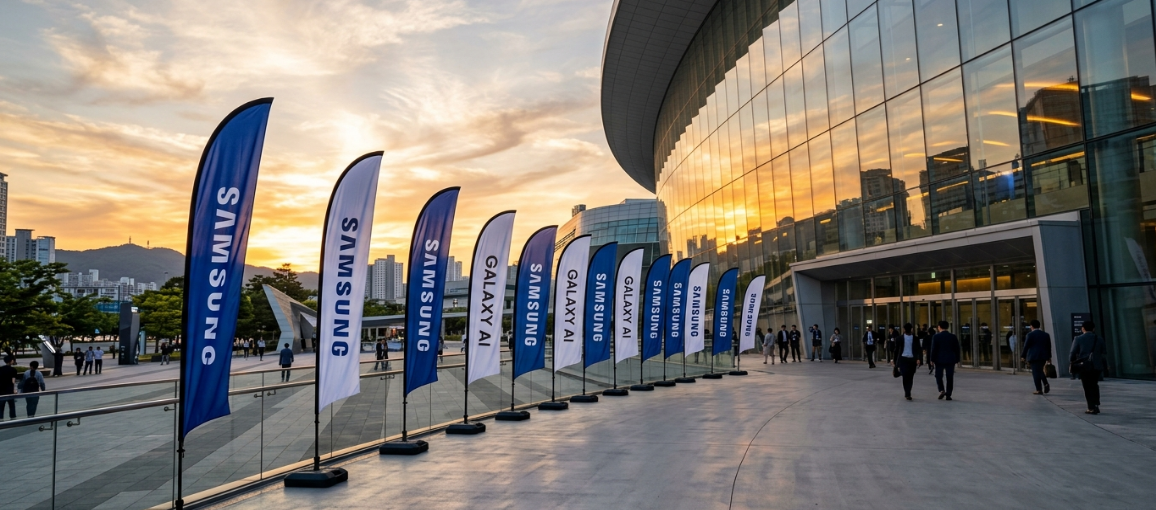
Feather flags are a system: flag + pole + swivel + base. Treating them as “just fabric” is why so many installations fail.
Base selection: match the base to your surface (and your wind exposure)
Vancke’s guide breaks down common base options and where they actually fit—see Finding the right feather flag base for your needs.
Quick rules:
Ground spike: best for grass, soil, sand (soft ground).
Cross base: best for indoor use or calm conditions on hard surfaces.
Water/weighted base: your go-to for hard surfaces and higher wind exposure.
Car base: underrated for outdoor lots when you can safely use a vehicle as the anchor.
⚠️ Warning: Cross bases are convenient—until wind turns them into a tipping point. If you’re on concrete/asphalt outdoors, plan on adding weight or choosing a weighted/water base.
Poles: what to look for (without obsessing over materials)
Vendors typically use fiberglass or aluminum pole systems. The key buying question is how the pole behaves under gusts: controlled flex is good; brittle failure is not.
If a vendor lists the pole set details, look for:
multi-section poles that fit tightly (no wobble at joints)
a smooth connection where the flag sleeve rides
a swivel/rotator so the flag can follow wind direction instead of twisting
Design secrets: the “3-second rule” for drive-by readability
If a car passes at city speed, you don’t have time for paragraphs.
Use this checklist:
One primary message (SALE, OPEN, GRAND OPENING, NOW HIRING)
Big type, high contrast
Logo at the top; supporting info below
Avoid thin fonts and low-contrast color combos
If your logo isn’t usable, don’t stall the project. Vancke includes free professional design with its feather flags—start from the Vancke Custom Feather Flags page and request a clean layout.
Ordering without chaos: proofing, timelines, and shipping clarity
For event teams, a vendor isn’t just a printer—they’re part of your delivery chain.
Vancke’s order flow is spelled out step-by-step in Vancke “How To Order”: request a quote, receive a proof by email, approve the proof, receive an invoice, then shipping + tracking.
On lead time expectations, Vancke also notes that for smaller orders (1–100 flags), delivery is typically about 6–12 days (see the Vancke How To Order page).
For shipping policy, Vancke states that All prices include FREE standard shipping worldwide and that orders take 1–2 business days to process, with a tracking link sent once the order ships.
The vendor checklist (copy/paste into your email)
What fabric do you recommend for my location (and why)?
What base should I use for my surface (and what weight/add-ons)?
Will I see a proof before production?
What’s the realistic timeline from proof approval to delivery?
What’s your guidance for windy days (take-down threshold and storage)?
FAQ
Are “feather flags,” “swooper flags,” and “feather flag banners” the same thing?
Mostly, yes. “Swooper” and “feather flag banner” are common market names for the same general style: a tall, curved or teardrop-shaped fabric flag on a flexible pole designed to move in the wind.
What’s the biggest mistake buyers make?
Buying a flag without planning the base. The base is what keeps the system upright; the flag is what gets blamed when the base fails.
Should I choose feather or teardrop?
Choose feather when you want more vertical print area and the classic swooper motion.
Choose teardrop flags when you want a tauter shape that tends to wrap less around the pole.
How do I make a feather flag last longer?
Follow basic handling rules: avoid harsh chemicals, wash gently, and store dry.