A custom mesh banner is not simply a smaller billboard. It is a decision about the surface carrying the message, the amount of outdoor exposure, and how the display must behave in its setting. A banner on a construction fence has a different job from a vertical marker at an event entrance or a framed backdrop inside a branded space.
Vancke describes custom mesh banners for outdoor advertising where airflow matters, with custom full-color printing and reinforced finishing options. Common applications include construction fences, sports venues, events, and large outdoor displays. This guide compares that use case with custom feather flags and tension fabric backdrops so you can choose the format that fits the site before you ask for a quote.
Start with the site’s job
Begin with the physical boundary or space that needs to carry the message. Is the message stretched across a long perimeter? Does it need to identify a point from a distance? Or does it belong inside a controlled, framed brand environment? Those questions are more useful than starting with a preferred product name.
- Perimeter communication: a long fence, barrier, or boundary needs a display that can use the available span and remain appropriate for an outdoor setting.
- Point identification: a visitor may need to find an entrance, registration area, sponsor zone, or activity point quickly.
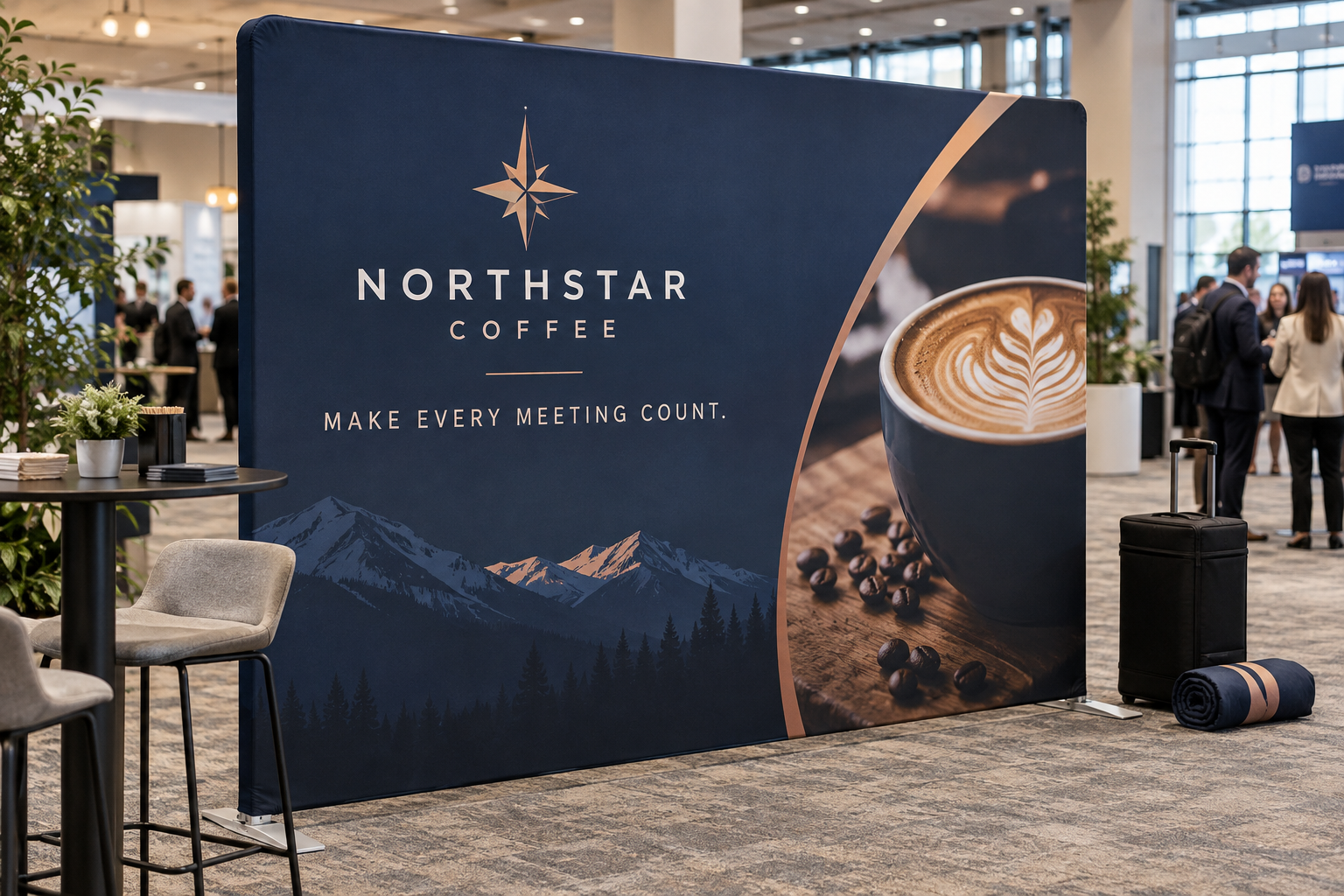
- Framed brand space: a presentation, photo area, trade-show space, or branded event zone may need a printed fabric surface over a supporting frame.
Once the job is clear, compare the product against four constraints: the surface, the message scale, the viewing direction, and the installation context. This avoids selecting a visually attractive format that does not match the site.
Choose a mesh banner when the message spans a permeable perimeter
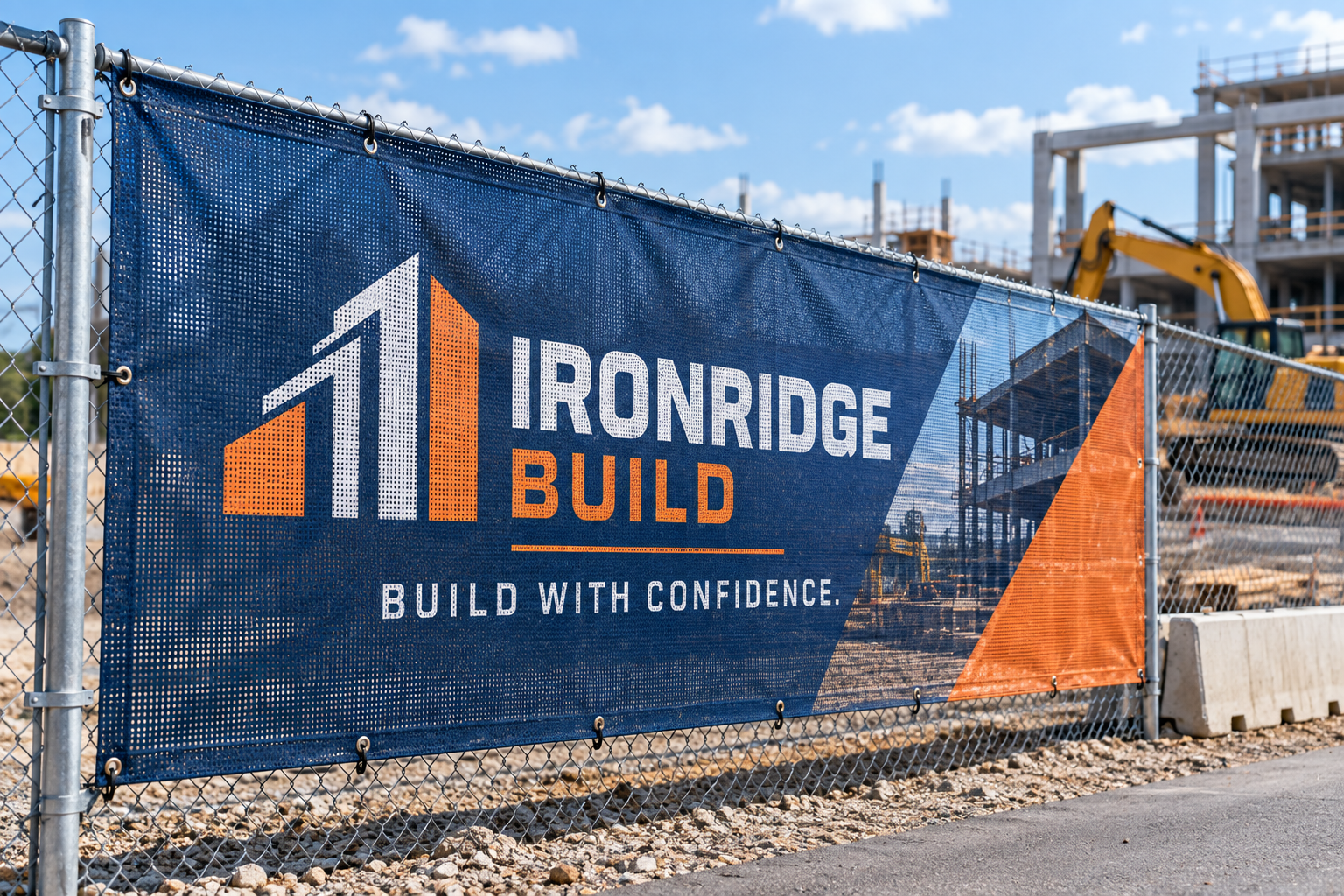
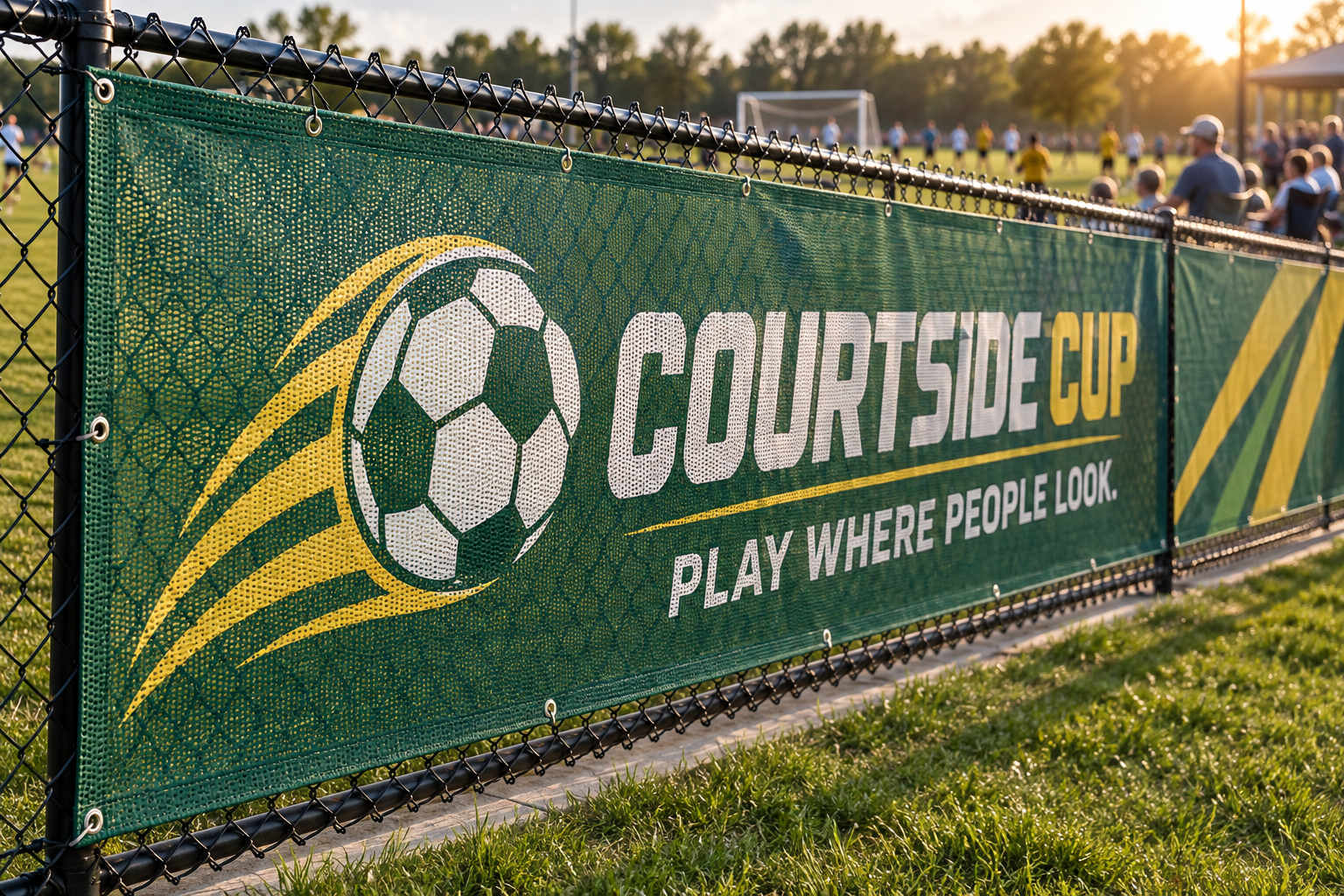
A custom mesh banner is a strong starting point when the display must cover a fence or other large outdoor boundary and airflow is part of the brief. The printed surface can carry a broad brand message across a construction fence, sports perimeter, event boundary, or large outdoor display. Reinforced finishing options should be discussed with the supplier when the banner will be installed across a long run or handled repeatedly.
The key question is whether a fence-spanning message solves the communication problem better than several small point markers or a framed display. If the audience approaches along a perimeter, a horizontal banner can let the brand, event theme, or directional message occupy the same visual line as the boundary. If the audience needs to find one doorway from several angles, a feather flag may be the clearer first choice.
Choose a feather flag when the message needs a vertical point marker
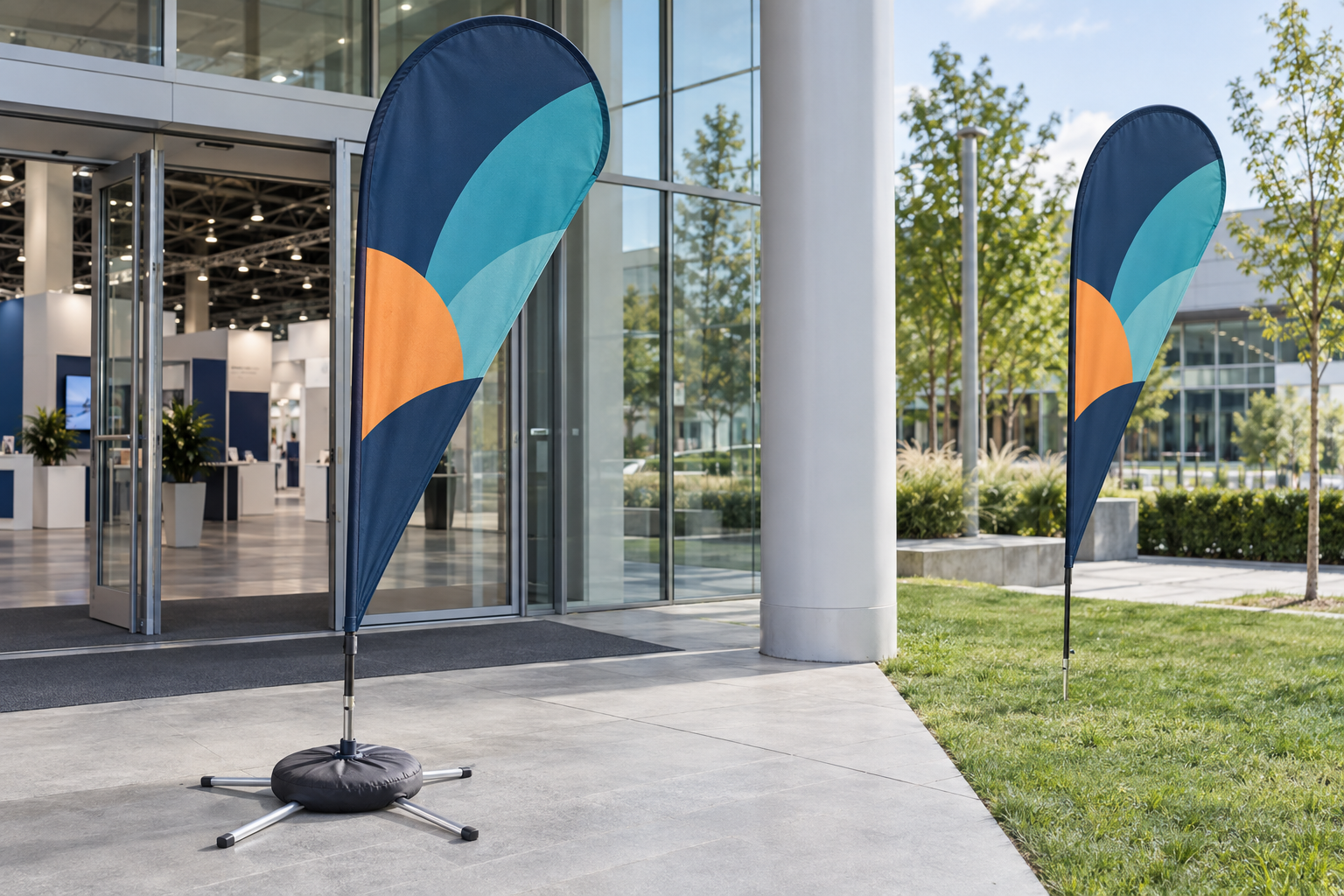
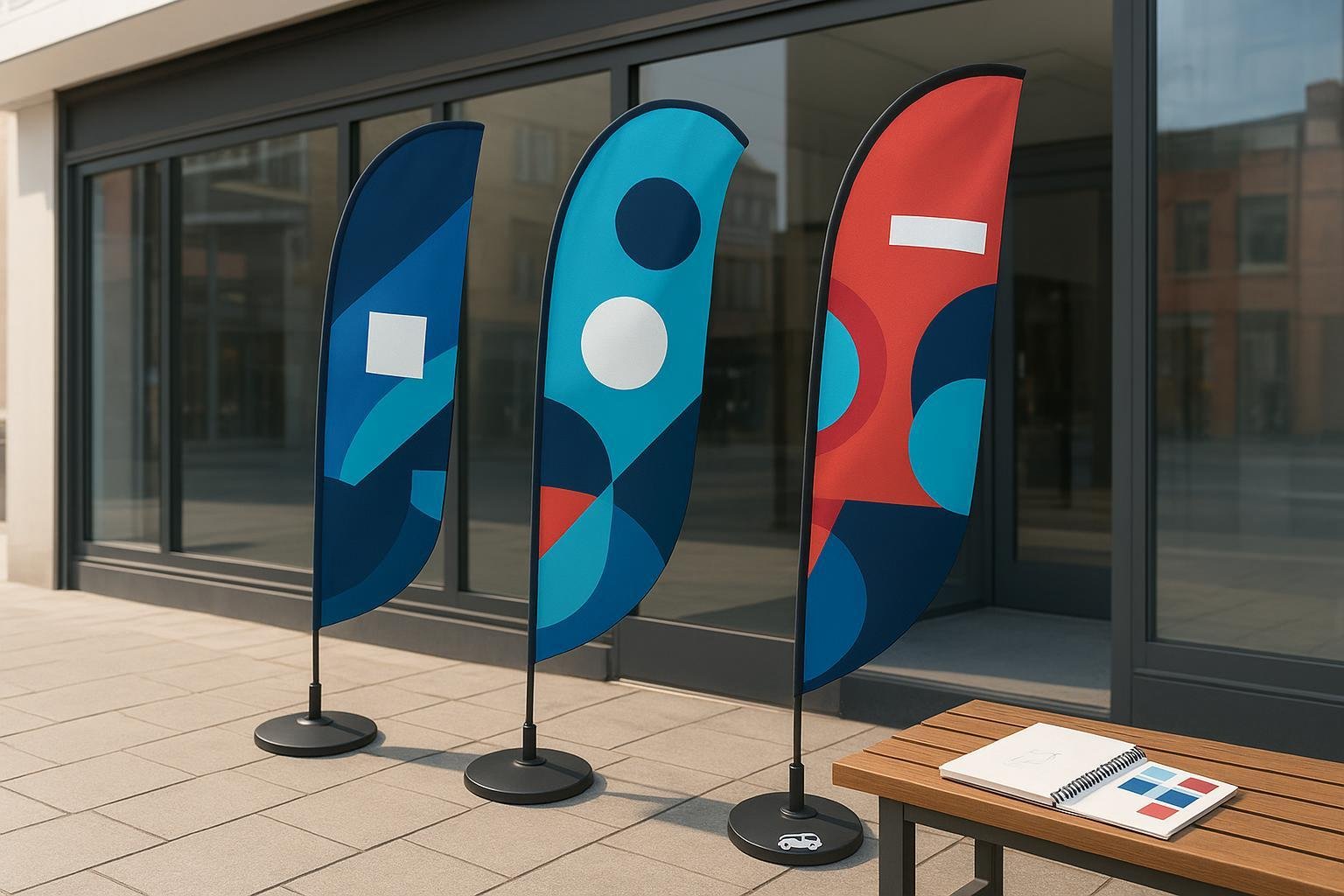
A custom feather flag is a better comparison when the job is to mark a location rather than cover a long boundary. Its open lower fly creates a distinct vertical silhouette for an entrance, queue, sponsor position, or activity zone where people need a tall visual cue.
The base and surface are part of the decision. On hard flooring, the approved project configuration is a four-arm cross base with a refillable water-weight bag centered over the base around the pole. On grass, soft soil, or sand, the ground-spike base must have its pointed shaft visibly inserted into the ground. A vehicle-tire placement needs a believable connection between tire, base, pole socket, pole, and fabric. If the site is a long outdoor fence, compare the amount of boundary you need to communicate and the number of separate units your team will manage.
Vancke lists multiple sizes and base options for custom feather flags, along with single-sided reverse and double-sided constructions and complete sets. Include the surface, viewing direction, quantity, and setup location in the inquiry so the product and hardware are evaluated together.
Choose tension fabric when the message belongs to a framed space
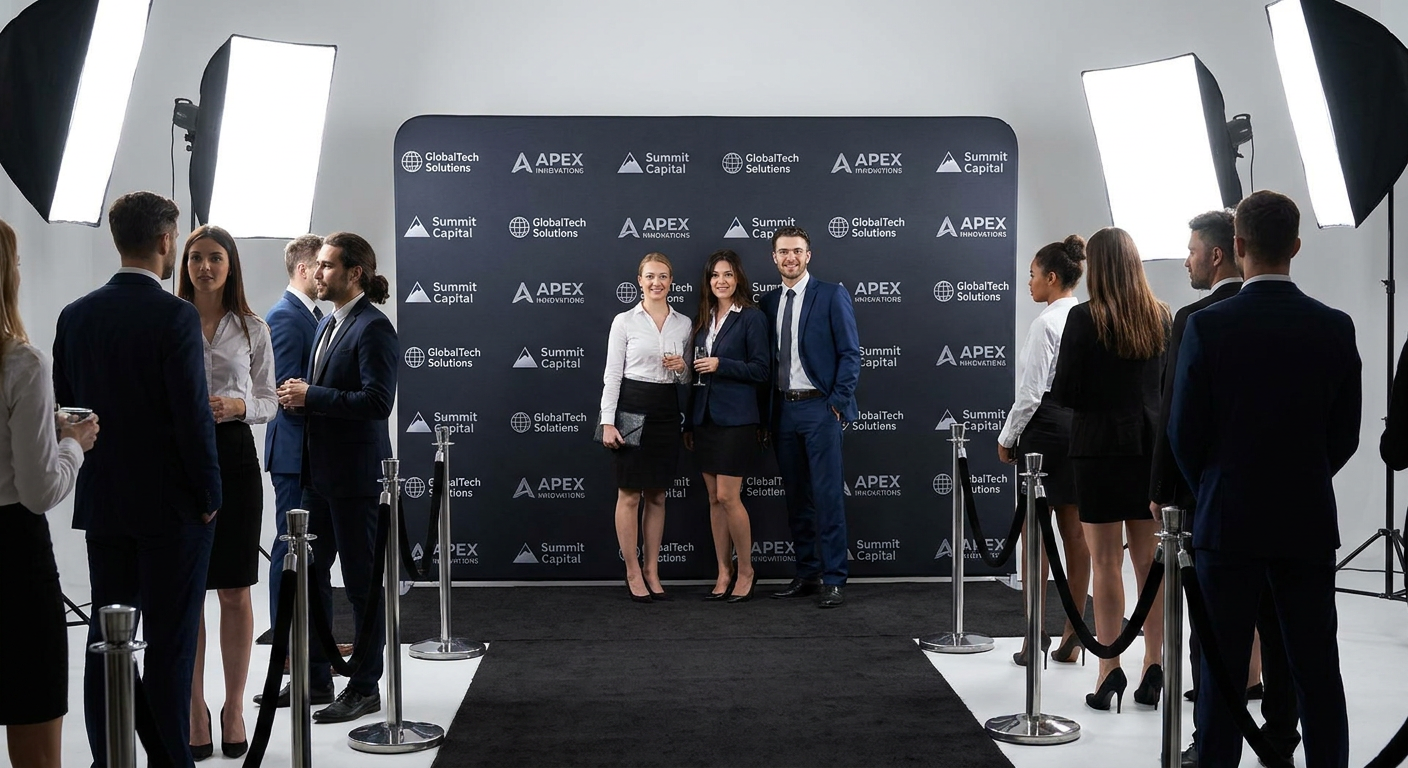
A tension fabric backdrop is the more natural comparison when the message should sit inside a defined branded environment. It is a printed fabric surface over a supporting frame, relevant to trade shows, photo areas, presentations, and branded event spaces. The frame establishes the footprint and the fabric fills that footprint with a controlled visual field.
This is a different communication problem from a fence banner. A backdrop can define where a photo is taken, where a presentation is delivered, or where a visitor encounters a complete brand scene. If the message must travel along a long outdoor perimeter, a tension fabric backdrop may be limited by its frame. If the message must create one polished branded zone, a perimeter banner may be too diffuse.
Compare the three formats by decision criteria
Use the following comparison before you request artwork or pricing:
- Surface: choose mesh when the available surface is a fence or large outdoor boundary; choose a feather flag when the display can stand as a separate vertical point; choose tension fabric when a frame can define a branded zone.
- Coverage: mesh can use a long run; a feather flag creates separate markers; tension fabric fills the footprint of its frame.
- Message scale: mesh suits a broad horizontal message; a feather flag suits a concise vertical hierarchy; tension fabric suits a composed scene or backdrop message.
- Viewing direction: state whether people move alongside the display, approach one point, or face a framed area directly.
- Installation context: describe the fence, venue, ground, frame, pedestrian route, and setup access instead of treating all outdoor spaces as interchangeable.
- Reuse: decide whether the hardware and display will support one campaign, a recurring event, or future artwork changes.
For any format, keep the customer brand, event or product theme, and one primary action easy to identify. A longer surface does not justify adding every selling point. The best format still fails if the audience cannot understand the message while moving past it.
Three practical scenarios
Construction fence: start with mesh when the fence is the available boundary and the goal is to communicate a project identity, site message, or customer-facing campaign across a long run. Confirm the fence attachment points, banner span, artwork repeat, and reinforced finishing requirements. Use a feather flag only if the brief also needs a separate entrance marker.
Sports perimeter: mesh is relevant when the perimeter itself needs sponsor, event, or venue communication and spectators will see the message while moving along the field or court. A feather flag can supplement the perimeter at registration or a gate. A tension fabric backdrop is better reserved for a photo, interview, or presentation zone where a framed background is useful.
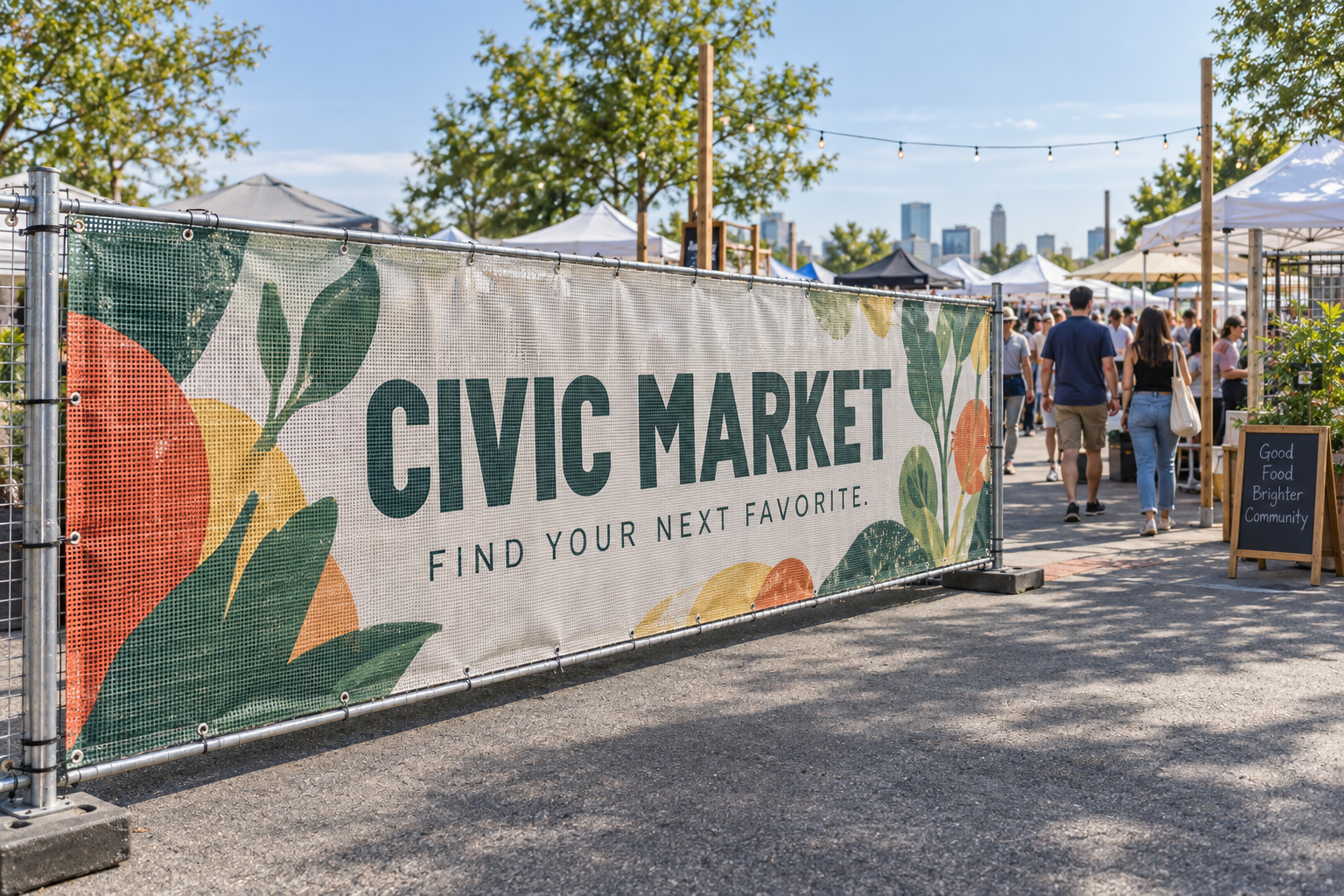
Large outdoor display: define whether the audience sees one long boundary or one focal point. For a long outdoor display, compare the coverage and airflow brief of mesh with the number of separate feather flags required. For a controlled customer photo area or presentation space, compare the frame footprint of tension fabric instead. The correct answer may include more than one format, but each item should have a distinct communication job.
Write a quote-ready brief
A useful inquiry lets the supplier evaluate the real site instead of guessing from a product name. Include the product format, fence or frame dimensions, photos of the installation area, viewing direction, expected audience path, surface and attachment method, quantity, and must-arrive-by date.
Then add the campaign layer: customer brand, product or event theme, slogan, approved logo files, required colors, primary call to action, and any copy that must appear. Separate those campaign details from reusable system information such as fence dimensions, preferred finishing, frame footprint, or display hardware. That separation makes future reorders easier without confusing one customer’s artwork with another’s.
If the choice is still unclear, say so in the inquiry. Vancke’s free design request can provide the site context and artwork status. For the next handoff, review Vancke’s ordering guidance and include the deadline, delivery address, receiving hours, and proof-approval owner.
Check the site before approving the artwork
Review the proposed display as a physical installation, not only as a flat design. Confirm that the mesh banner has a plausible connection to the fence, that reinforced edges and grommets match the attachment plan, and that the customer-facing surface contains the approved brand and message. For accessible event routes, the ADA Standards for Accessible Design are a useful U.S. reference; the venue’s rules and applicable local requirements still control the final placement.
Also check the negative space around the display. A fence banner should not hide a required opening or sign. A feather flag should not narrow a route. A tension fabric backdrop should not block the flow into the space it is meant to brand. If the installation plan is uncertain, pause the artwork approval and resolve the site question first.
Next step
Choose the format by the job: mesh for a fence-spanning outdoor message where airflow matters, feather flags for separate vertical point markers, and tension fabric for a framed branded space. Then send an inquiry with the site photos, dimensions, viewing direction, customer brand, slogan, artwork status, quantity, and must-arrive-by date. A clear comparison brief gives Vancke the information needed to recommend the right product and move the request toward a useful quote.