A tension fabric backdrop usually fails long before the event opens. The visible symptom may be a loose-looking graphic, a slow setup, an awkward footprint, or a design that photographs badly. But the root cause is often earlier: the buyer chose a format without describing the room, sent incomplete artwork, or asked for a quote without explaining how the display would be transported and reused.
That makes troubleshooting useful before you place an order. Instead of asking whether a backdrop is “good,” diagnose the specific problem your team is trying to prevent. A custom tension fabric backdrop combines a printed stretch-fabric graphic with a supporting frame, so the result depends on the product, the artwork, the installation environment, and the handoff between your team and the supplier.
This guide gives event planners, exhibition companies, distributors, and brand teams a practical way to find the weak point before it becomes an event-day surprise. Vancke describes its tension fabric displays as custom printed fabric fitted over lightweight aluminum frames, with straight, curved, and S-shape options for trade shows, conferences, retail promotions, corporate events, and other branded spaces. The goal is not to add complexity. It is to make the few decisions that matter visible early.
Start with the symptom, not the product label
“We need a backdrop” is not yet a useful specification. Begin with what is going wrong or what the team is afraid will go wrong:
- The graphic may look loose, wrinkled, or unfinished after assembly.
- The team may lose time because the setup sequence or component list is unclear.
- The display may fit the artwork file but overwhelm the real booth, stage, or retail room.
- The first event may succeed, but the display may be difficult to transport, store, or update for the next one.
Each symptom points to a different question. A loose-looking graphic is a fit and tension question. A slow setup is a frame, labeling, and handoff question. A poor room fit is a measurement and viewing-distance question. Weak reuse is a graphics and transport question. Treating all four as a generic “quality” concern makes it harder to get a precise quote.
Problem 1: The graphic looks loose or unfinished
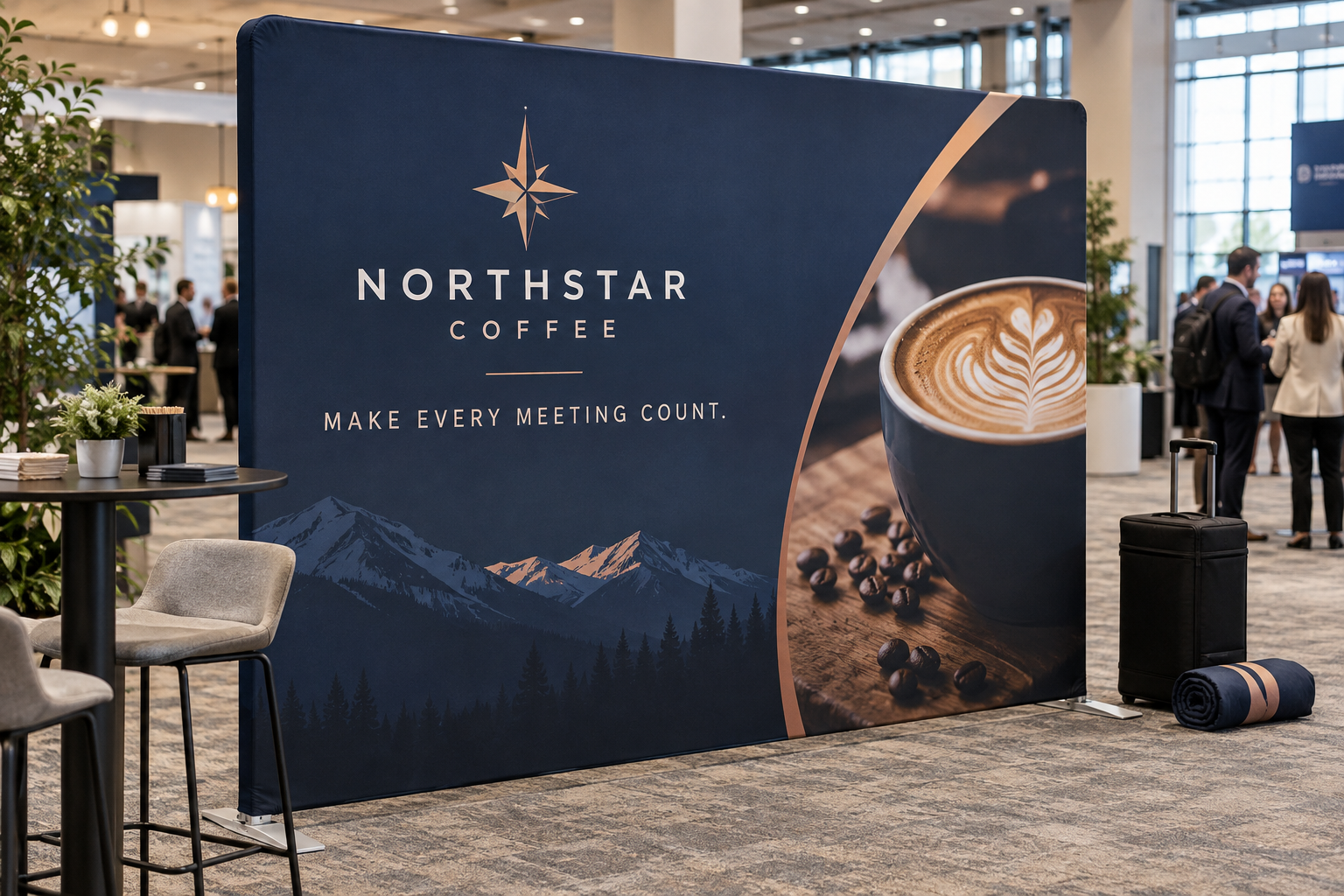
A tension fabric backdrop should look like a fitted graphic on a supporting structure, not a curtain hung in front of a wall. If the finished surface looks loose, check the complete system rather than blaming the print alone.
First, confirm the intended shape. Vancke lists straight, curved, and S-shape display options. A curved wall changes the viewing angle and the way a graphic wraps around the frame. The artwork should be planned for that shape instead of being treated as a flat poster that happens to be placed on a curve.
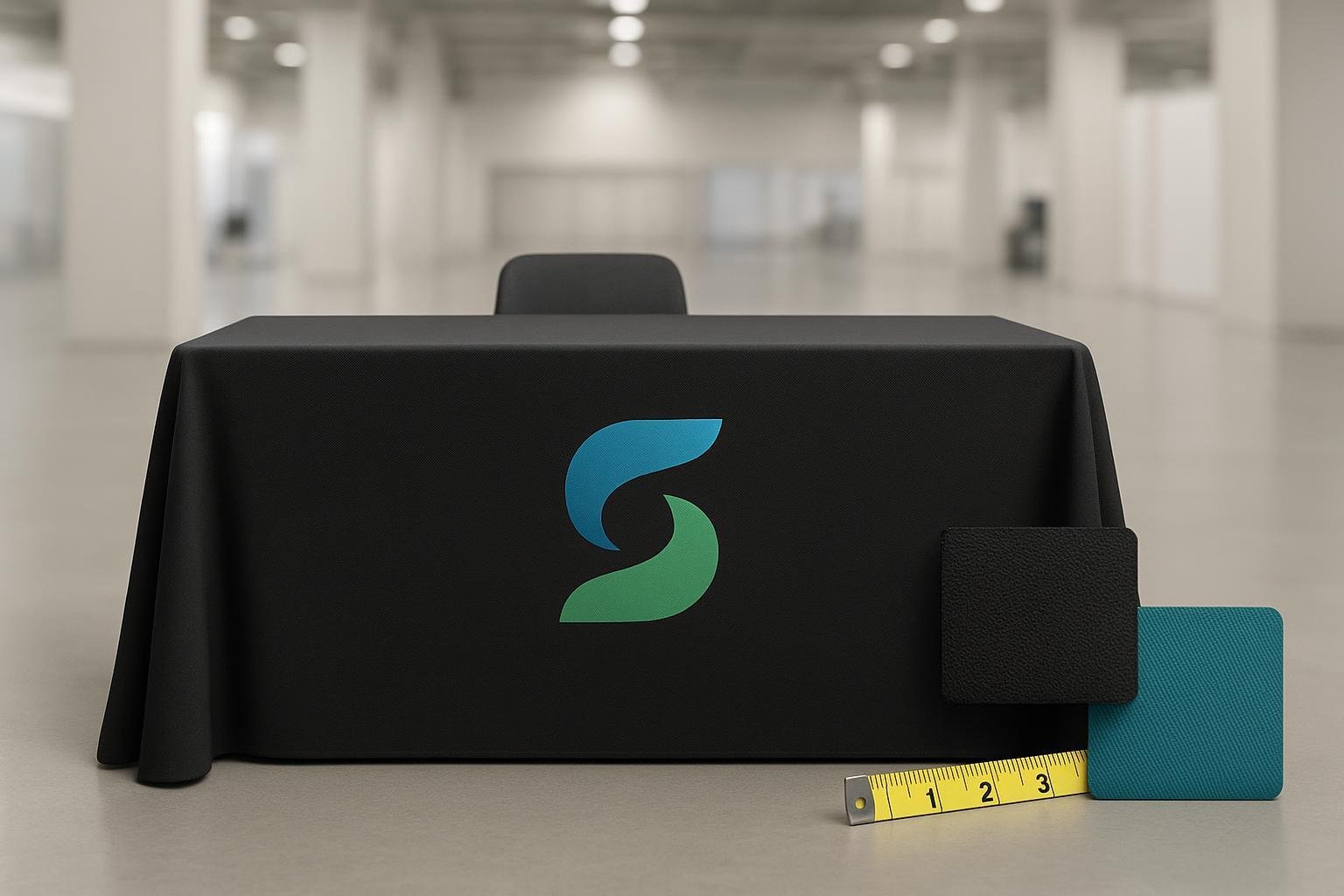
Second, ask how the fabric is secured. The product page describes a precision-fit zipper tension system and a stretch fabric that fits over the aluminum frame. Those details matter because the print, zipper edge, frame joints, and feet work together. Ask the supplier to show the expected fitted result in the proof or product explanation, including the edges that may be hidden after assembly.
Third, check the artwork itself. A low-resolution image, an important logo too close to an edge, or a headline placed where the frame changes direction can make a technically correct display look wrong. Send the highest-quality logo and images available, and ask the designer to identify safe areas before the proof is approved. Vancke’s artwork templates are a useful starting point when your team needs the production dimensions before finalizing the layout.
Problem 2: Setup takes too long or parts go missing
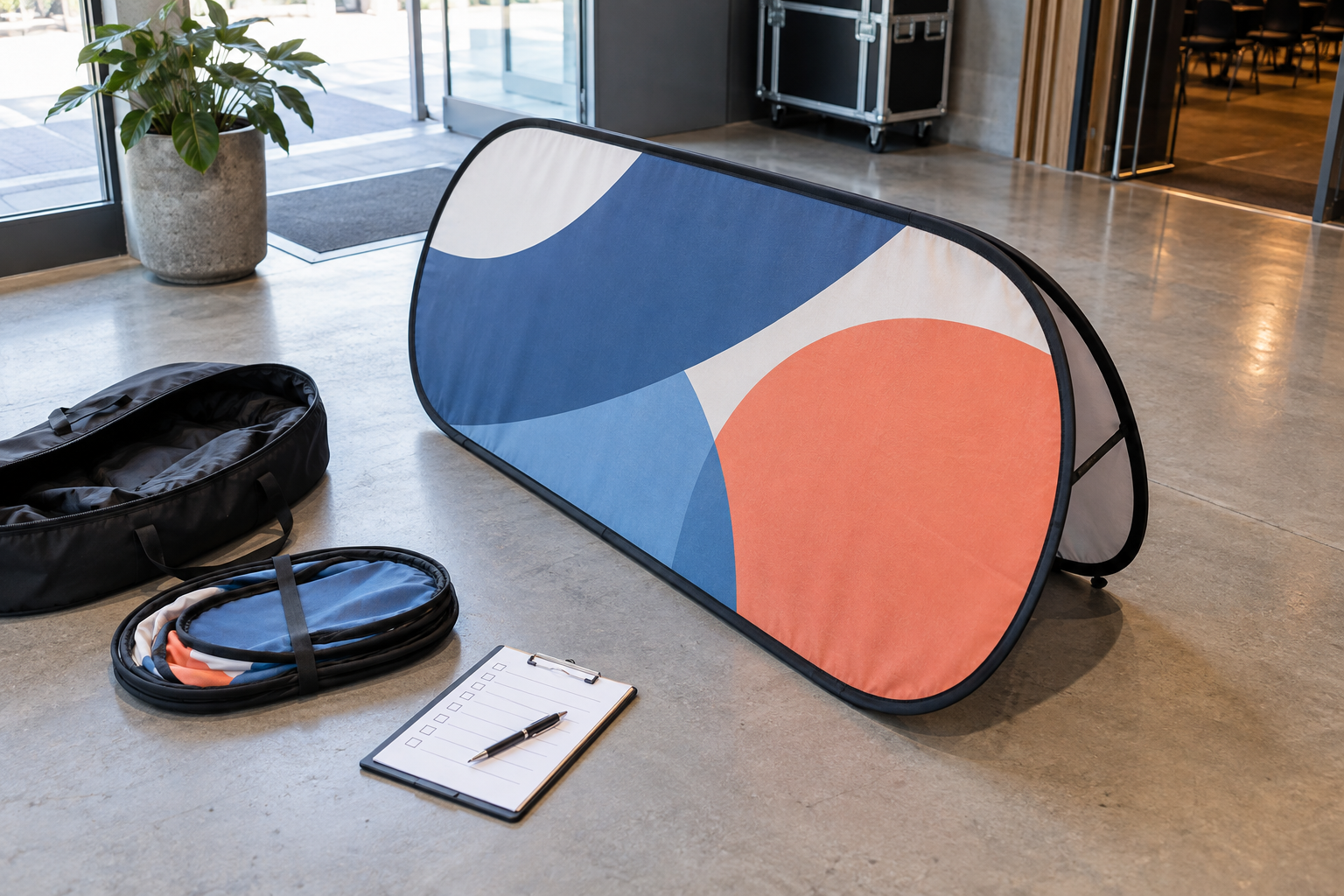
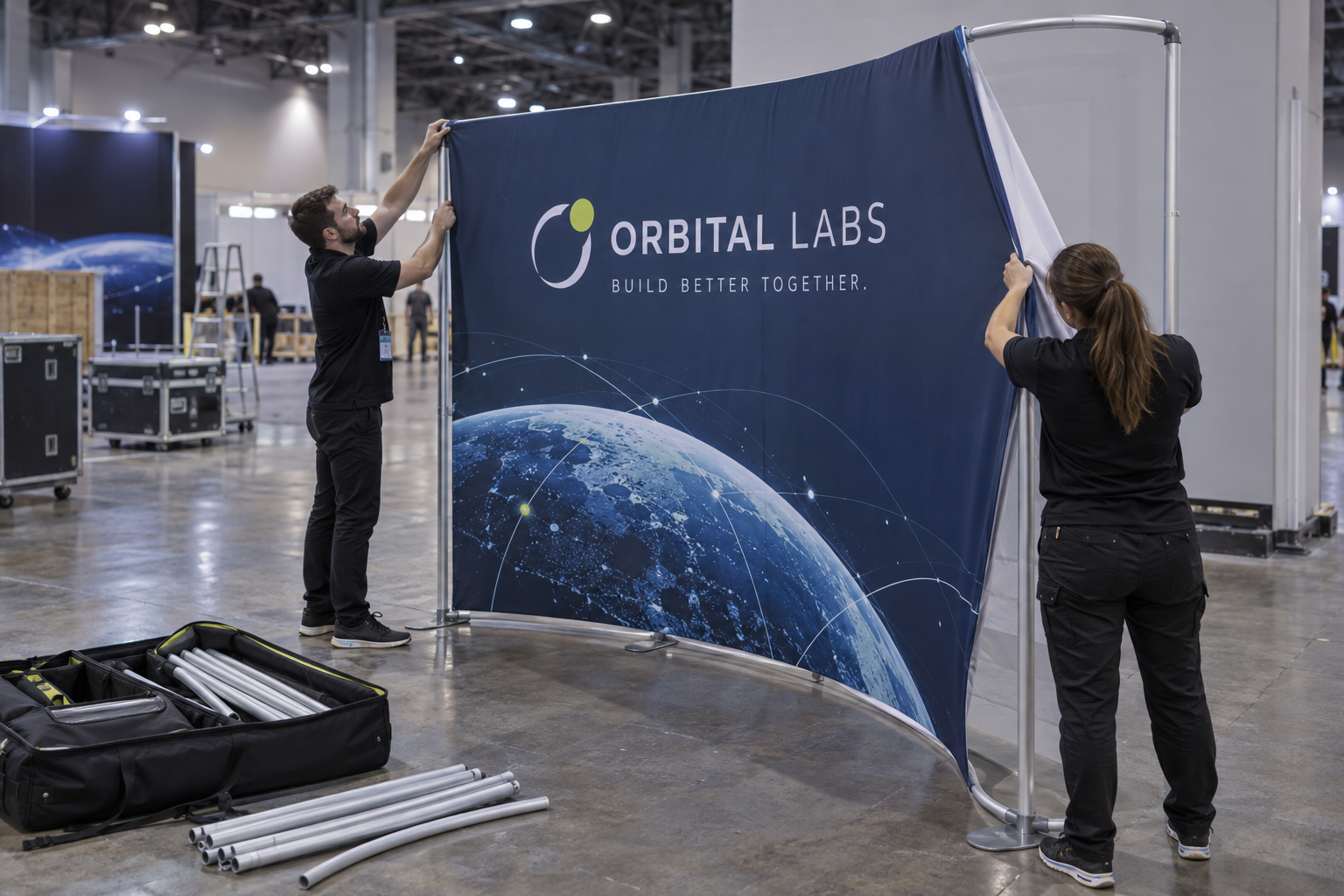
Setup friction is usually a process problem. The team may receive a portable display but still lose time if nobody knows which tube connects where, which graphic belongs to which frame, or where the bases and carry bag should be stored after the event.
Write a simple setup brief before requesting a quote. Name the display shape, the intended size, the number of units, the destination, and the person responsible for receiving the package. Ask the supplier to confirm what the complete set includes. Vancke describes a complete set as a custom printed banner, aluminum poles with bases, and a carry bag, while its product page also describes tool-free assembly with numbered snap-lock tubing. Use those published details as questions to confirm for your chosen configuration, not as a substitute for the actual order specification.
Then run a dry fit before the event. Open the carry bag, lay out the components, assemble the frame, and fit the graphic in the same order your team will use on site. Record one short internal checklist: frame sequence, graphic orientation, base placement, final inspection, and repacking order. If the display is for a distributor or a client, include that checklist with the quote and proof so the operational expectation is shared.
Do not hide a deadline inside the phrase “rush order.” State the event date, the must-arrive-by date, the receiving hours, and the latest acceptable proof-approval date. Vancke’s ordering process describes submitting requirements, approving the digital proof and price, processing payment, and dispatching the order. Your inquiry should ask the supplier to confirm the dates for those handoffs.
Problem 3: The display fits the file but not the room
A backdrop can be the correct size on paper and still be wrong for the venue. The issue is often not the available width alone. It is the relationship between the display, the audience path, nearby furniture, lighting, doors, camera positions, and the distance from which the main message must be understood.
Measure the usable wall or booth width, ceiling clearance, access route, floor condition, and the space needed to assemble the frame. Mark the locations of doors, fire exits, registration desks, counters, and power equipment. If the display will sit near a public route, confirm the venue’s own circulation and accessibility rules. For a U.S. reference, review the ADA Standards for Accessible Design, then follow the venue and local requirements that actually govern your event.
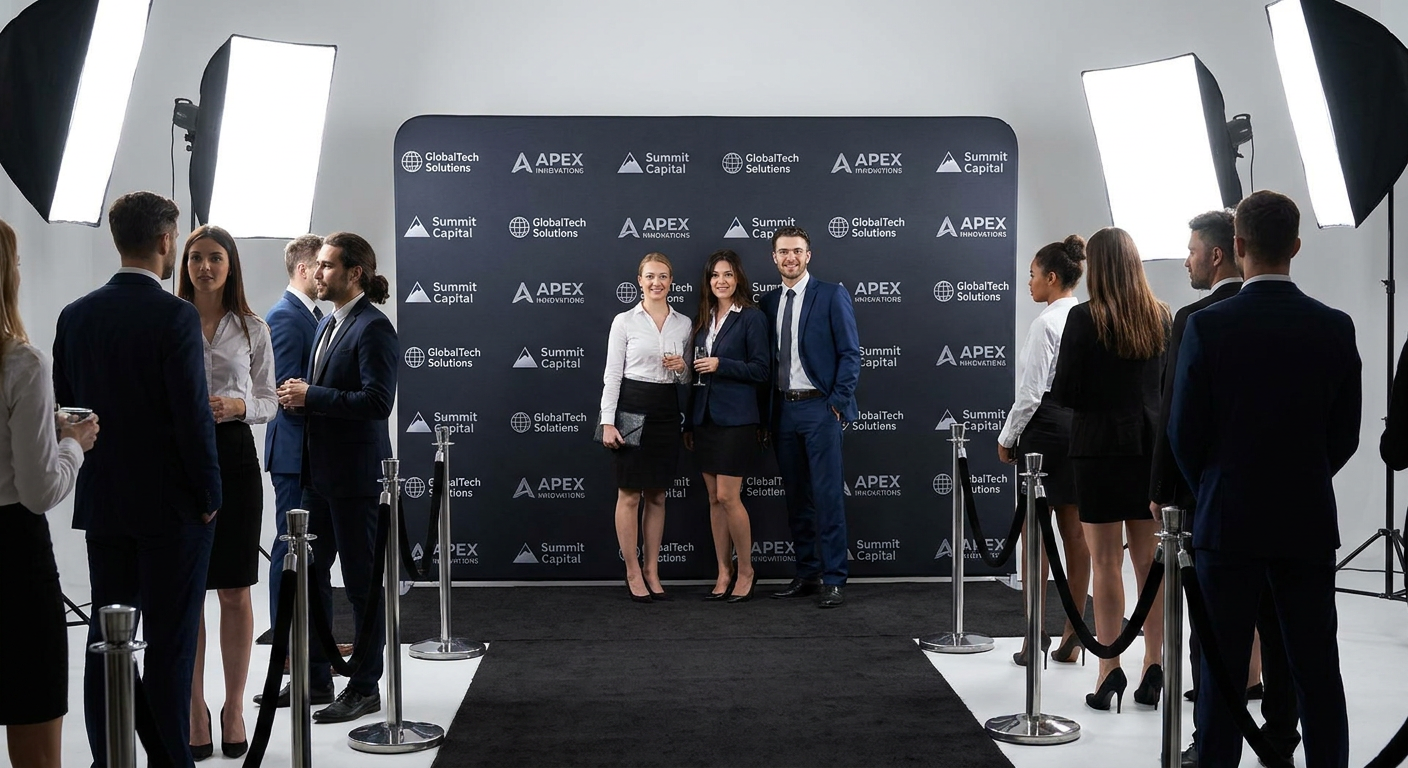
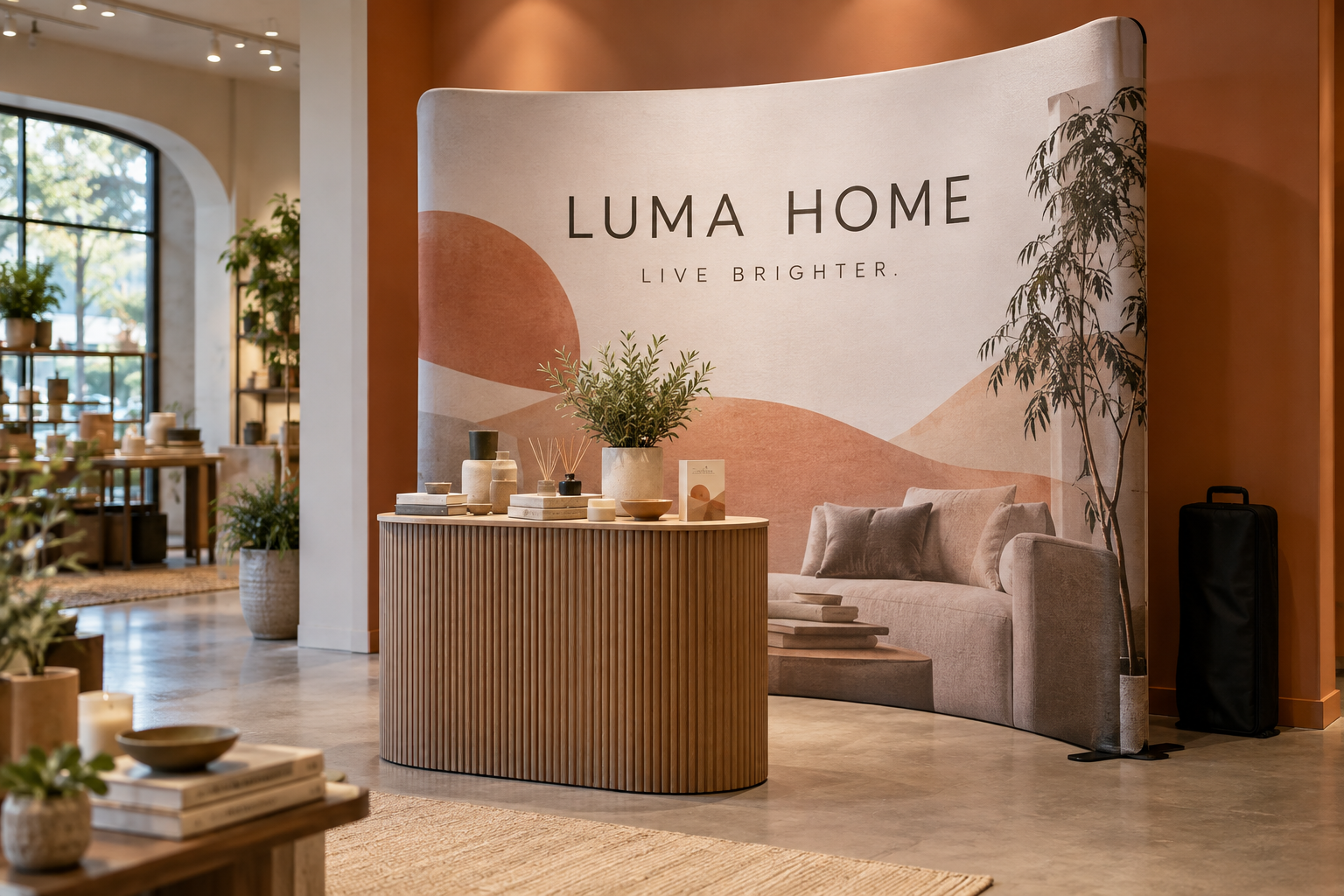
Next, describe the viewing logic. Will people see the wall head-on while waiting, from an angle as they pass, or from both sides of a booth? Will a photographer stand close to it? Does the message need to work in a wide group photo, a vertical social clip, or a live presentation? A straight display may be the simplest fit. A curved display may create more depth. An S-shape may make a premium spatial statement, but only if the room leaves enough clearance for the form to be seen rather than squeezed into a corner.
Keep the artwork hierarchy tied to that viewing condition. Decide what must be read first, what supports the story, and what can be omitted. A logo, one message, and one next action usually create a clearer brief than a wall filled with every product, partner, and paragraph the team owns. If the backdrop is also part of an online event recap, prepare accurate alternative text for the published image; the W3C WAI image tips provide a useful noncommercial reference.
Problem 4: The first event works, but the second one is expensive
Ask about reuse before you approve the first graphic. Vancke describes replaceable graphics, which can let a team keep using the aluminum frame while changing the printed fabric for a seasonal campaign, a new product, or a different client. That possibility changes the buying conversation: you are not only choosing a backdrop for one date; you are deciding which parts should remain stable and which parts should be updateable.
Separate the reusable system from the campaign layer in your brief:
- System: display shape, frame, bases, carry bag, storage method, and the room sizes you expect to use.
- Campaign: customer logo, message, images, sponsor hierarchy, event date, and call to action.
- Handoff: approved artwork owner, proof approver, receiving contact, and the place where the final files and care notes will be stored.
This structure also helps distributors and exhibition companies quote multiple customers without mixing one client’s artwork, destination, or deadline with another’s. If you need a new message later, you can ask whether a replacement graphic fits the existing frame instead of assuming the whole system must be repurchased.
Turn the diagnosis into a quote-ready brief
Before you contact a supplier, prepare these answers:
- What event, room, or promotion will the display support?
- What shape and approximate size fit the usable space?
- Will the audience view it head-on, at an angle, or from multiple directions?
- What must the viewer understand or do after seeing it?
- What logo, copy, images, sponsor marks, and colors are approved?
- Which parts of the system should be reused for later events?
- What are the event date, must-arrive-by date, delivery address, and receiving restrictions?
- Who approves the proof, and what checks must be completed before production?
Ask for the response in the same order. Request the recommended shape, included components, artwork requirements, proof timing, production and delivery plan, and any assumptions that could change the quote. If design help is needed, use Vancke’s free design request and provide the room photos, rough layout, brand assets, preferred message, and deadline. The more specific the input, the less likely the first proof will become a discovery exercise.
A final pre-production check
Do not approve the proof until someone has checked the display as a physical object. Confirm the shape, visible frame edges, zipper or sleeve placement, logo scale, readable distance, colors, image crop, and the way people will stand or move in front of it. Confirm that the product scene in your own marketing images shows a plausible frame, fabric, floor contact, and carry method rather than an unsupported graphic panel.
Then keep the approved proof, quote, delivery details, and setup checklist together. That record is useful when a client asks for a reorder, when a distributor hands the project to another team member, or when the same frame needs a replacement graphic.
Next step
If your current backdrop brief only says “custom tension fabric backdrop,” it is not ready for a low-risk quote. Add the symptom you need to prevent, the room conditions, the viewing logic, the reusable system, and the proof-approval owner. Then send the completed brief with your artwork or request design support through Vancke’s custom tension fabric backdrop page.
A good inquiry does not promise that every event is identical. It gives the supplier enough information to recommend the right display shape, prepare an accurate proof, and confirm a delivery plan that your team can actually use. That is how a portable backdrop becomes a dependable event asset instead of another last-minute installation risk.